
Is Chestnut Wood Good for Furniture? Chestnut vs Walnut Guide

Yes, chestnut is a good wood for furniture, as long as you know what you are buying. Chestnut is a decay-resistant hardwood with bold, open grain and a warm honey color, but it is noticeably softer than walnut, so it suits pieces you are happy to see wear in with character. Below: how chestnut compares with walnut, and what we make from it.
We build dining tables, coffee tables, a media console, a desk and nesting tables in solid chestnut, alongside our walnut range. If you are weighing a chestnut epoxy live edge table against a walnut one, this guide is for you.
What is chestnut wood, and is it good for furniture?
The chestnut used in furniture is usually sweet chestnut (Castanea sativa), the same tree that gives edible chestnuts. Several of our product pages specify European chestnut. According to the Wood Database entry for sweet chestnut, the heartwood is light to medium brown and darkens to a reddish brown with age, the narrow sapwood is pale, and the texture is coarse with straight to spiral grain. Furniture is one of its listed common uses.
What that means in your home: chestnut reads lighter and more golden than walnut, the grain is lively and open, and the color will deepen slowly over the years. If you like a bright, natural, slightly rustic look, chestnut is a very good choice.
Is chestnut a hardwood?
Botanically, yes: chestnut comes from a broadleaf tree, so it is a hardwood. On the hardness scale, though, it sits on the softer side. The Wood Database lists sweet chestnut at 680 lbf on the Janka test, against 1,220 lbf for English (European) walnut and 1,010 lbf for black walnut. In plain terms, a dropped fork or a pen pressed through paper leaves a mark on chestnut more easily than on walnut.
Many owners see those small marks as part of the table's story. If you want a top that stays crisp under heavy family use, walnut is the safer pick, or use placemats and felt pads on chestnut.
Is chestnut wood furniture durable?
Durability has a few parts, and chestnut does well on most of them:
- Decay resistance: the Wood Database rates sweet chestnut heartwood as durable to very durable. For comparison, it rates English walnut as moderately durable.
- Insects: the same source notes chestnut, like walnut, is susceptible to insect attack as raw timber. (An older version of this article said otherwise; we have corrected it.)
- Workability: chestnut is easy to work with hand and machine tools, but it splits easily when nailed or screwed, so joinery and screw holes need care. It glues, stains and finishes well.
- Finish: day to day, the finish does most of the protecting. Our chestnut product pages list a matte protective topcoat (media console), matte lacquer (nesting tables), wood oils (Parsons desk) and epoxy resin accents (the Terra and Sierra tables).
Chestnut vs walnut furniture: side by side
| Chestnut | Walnut | |
|---|---|---|
| Color | Light to medium, honey brown; darkens toward reddish brown with age | Pale brown to dark chocolate with darker streaks; near-white sapwood |
| Grain and texture | Open, coarse texture; bold, expressive figure | Medium texture with a soft natural luster |
| Hardness | Softer; shows dents more readily | Harder; better for heavy daily use |
| Decay resistance | Durable to very durable | Moderately durable (English) to very durable (black) |
| Look in a room | Bright, relaxed: farmhouse, Scandinavian, Japandi | Deeper, more formal: mid-century, modern, traditional |
| Where it works best | Living room tables, media console, relaxed kitchen table | Main dining table, bedroom, office pieces that see daily wear |
Sources for color, hardness and decay ratings: the Wood Database pages linked above. "Look in a room" is our own view from making both.
The short version: choose chestnut if you want warmth, a lighter room and grain with plenty of movement; choose walnut if you want a darker tone and a harder surface. Our guide Is walnut good for furniture? covers the walnut side in more depth.
Can chestnut wood make a good table?
Yes. Chestnut's wide boards and bold figure make striking tabletops, and it is easy for a workshop to shape and finish. We make three chestnut dining tables:

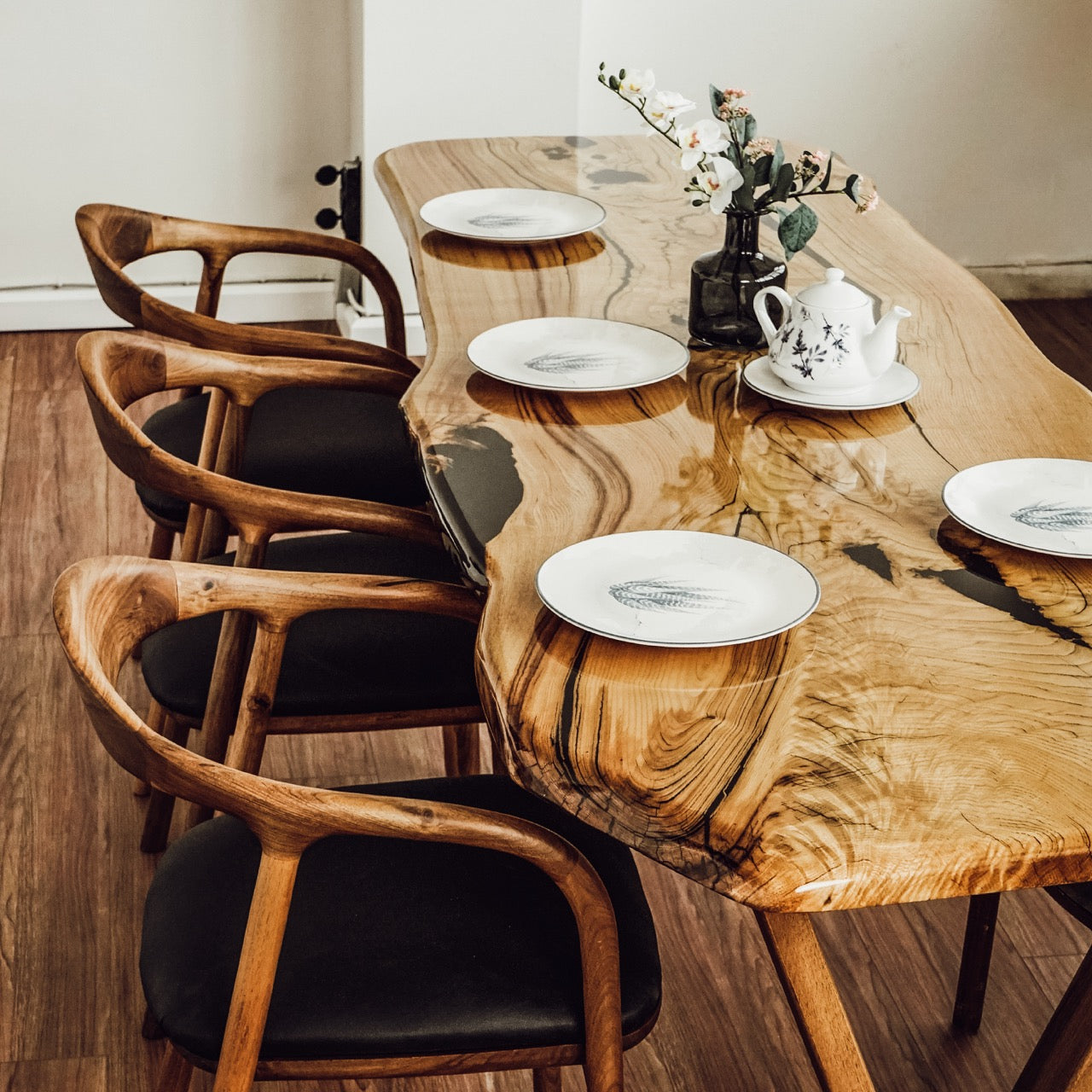
- Terra Chestnut Epoxy Live Edge Farmhouse Table: European chestnut with epoxy resin accents and a live edge. The product page notes the top and legs ship separately and the legs screw on.
- Sierra Live Edge Chestnut Dining Table: European chestnut with a natural live edge on metal legs. The product page notes sizes may vary by 0–1 inch because each top is handmade.
- Grove Solid Chestnut Dining Table: 100% solid chestnut on two solid panel legs, with natural knots and grain left visible on purpose.
| Size (in / cm) | Grove | Sierra | Terra |
|---|---|---|---|
| 42 x 30" / 107 x 76 cm | – | Yes | Yes |
| 47 x 28" / 119 x 71 cm | – | Yes | Yes |
| 60 x 30" / 152 x 76 cm | Yes (4-seater) | Yes | Yes |
| 72 x 34" / 183 x 86 cm | Yes (6-seater) | Yes | Yes |
| 80 x 36" / 203 x 91 cm | Yes (8-seater) | Yes | Yes |
| 95 x 40" / 240 x 101 cm | – | Yes | Yes |
Seat counts are the labels on the Grove page; the Sierra page says it seats 4 to 8 people. For more on choosing a slab table, see our live edge dining table guide and the epoxy river table guide.
Will my chestnut table look like the photo?
This is the right question to ask about any slab table. Your table will match the photo in species, design, finish and size, but not knot for knot. Chestnut grows with cracks, knots and color shifts, and on the Terra and Sierra those features are filled with resin rather than cut away. That is what makes each one different from the next.

Three practical steps help:
- Look at every photo on the product page, not just the first, so you see how much one top can vary in color and figure.
- If a detail matters to you (say, how many dark resin lines you want), email support@upphomestore.com before ordering and ask. It is easier to agree on it up front than after delivery.
- Plan around the timeline. Large handmade pieces like these take about 6–7 weeks of production, then 3–5 business days of shipping. Shipping is free to the US.
On arrival, check the box before you sign. If it is visibly damaged on the outside, do not accept it and ask the carrier for a Damage Assessment Report. If you find damage after unpacking, email support with photos right away. Note that under our return policy a difference in wood tone is not a reason for return, which is one more reason to ask questions before you order.
Other chestnut furniture we make
Chestnut is not only for dining tables. Current chestnut pieces include:
- Chestnut Coffee Table, rectangular, in 47 x 23.5" / 120 x 60 cm and 55 x 28" / 140 x 70 cm.
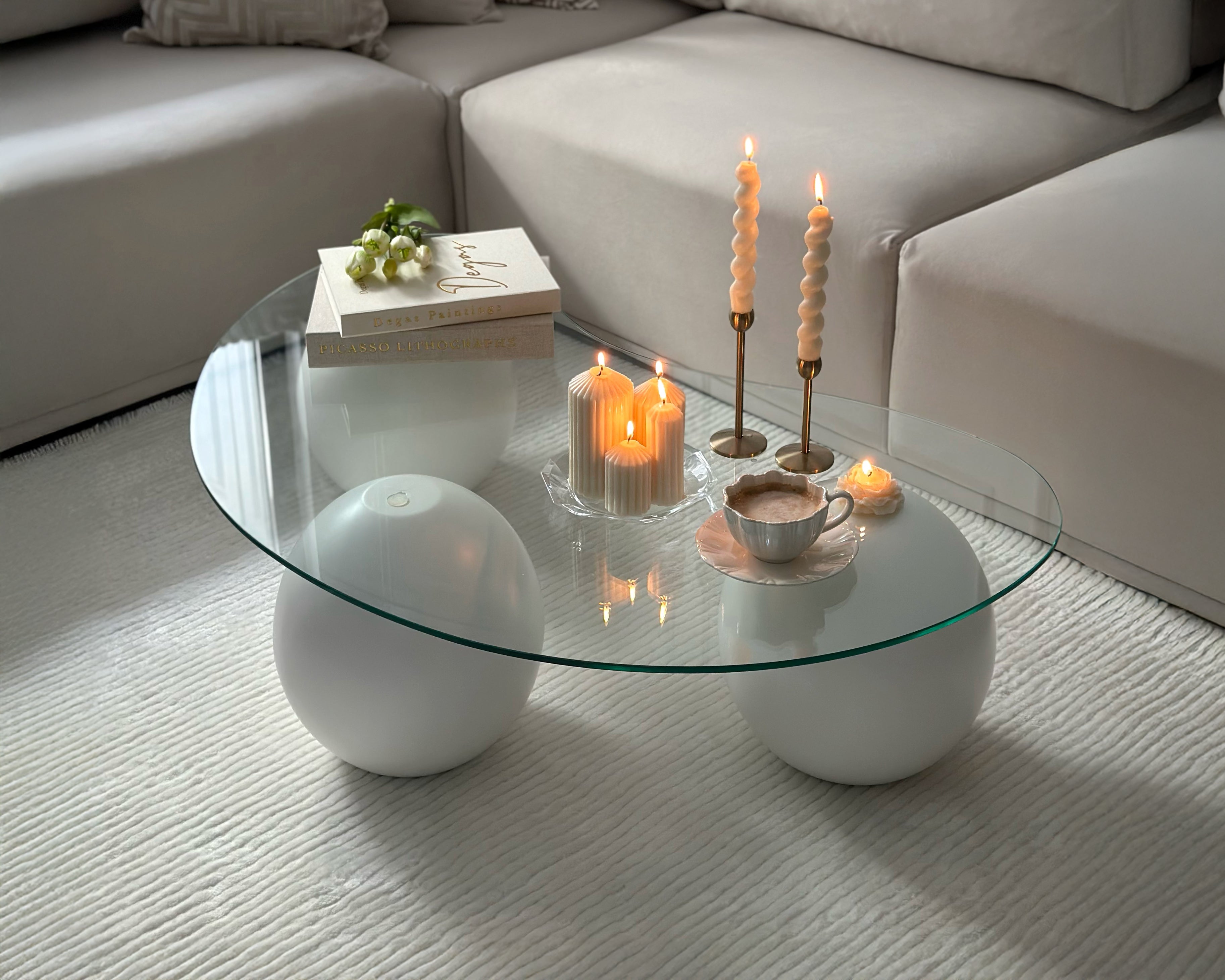
- Japandi Chestnut Coffee Table with an oval top on two semicircular supports.
- Solid Wood Round Coffee Table, offered in chestnut or oak.
- Solid Chestnut Media Console in 70, 78 and 86 inches, with two cabinets and two drawers. Its product page notes it is delivered only within the New Jersey Tri-State Area.
- Solid Wood Parsons Desk in chestnut, from 42 x 20" / 107 x 51 cm to 72 x 34" / 183 x 87 cm, with a 1.5–2 inch thick top.
- Chestnut Nesting Tables, Set of 3, in European chestnut with a matte lacquer finish.

Our nesting tables guide covers sizes and layouts if you are deciding between a set and a single coffee table.
Caring for chestnut wood furniture
Chestnut tables last for many years with simple habits. Dust with a soft, dry cloth; wipe spills promptly; use coasters under hot or wet glasses and placemats under plates; and add felt pads under anything you slide across the top. Skip harsh, abrasive cleaners. Because chestnut is softer than walnut, those habits matter a little more. Our solid wood dining table care guide goes into detail.

Chestnut furniture: frequently asked questions
Is chestnut wood good for furniture?
Yes. It is easy to work, finishes well, resists decay and has an attractive open grain. Its main trade-off is that it is softer than walnut, so it shows dents more easily.
Is chestnut a hardwood or a softwood?
A hardwood, botanically. It sits at the softer end of hardwoods: the Wood Database lists it at 680 lbf on the Janka test, compared with 1,220 lbf for English walnut.
What color is chestnut wood?
Light to medium brown, often with a honey or golden tone, darkening toward reddish brown with age. Finish also affects it: a gloss epoxy finish looks richer and deeper than a matte one.
Chestnut vs walnut: which is better for a dining table?
For a hard-working family dining table, walnut's extra hardness is the safer choice. For a lighter room or a statement slab where character marks are welcome, chestnut is an excellent, warmer alternative.
Can chestnut furniture go outdoors?
Chestnut timber is rated durable against decay, but our chestnut pieces are made and finished as indoor furniture. None of their product pages describe them for outdoor use.
Ready to compare slabs? Browse our live edge dining room tables, or see our solid wood coffee tables if you would rather start with a smaller chestnut piece.
Sizes and materials are taken from our product pages. Photos show our own pieces. This article was prepared with AI assistance and reviewed by the UPP Home team before publishing.


